Coding
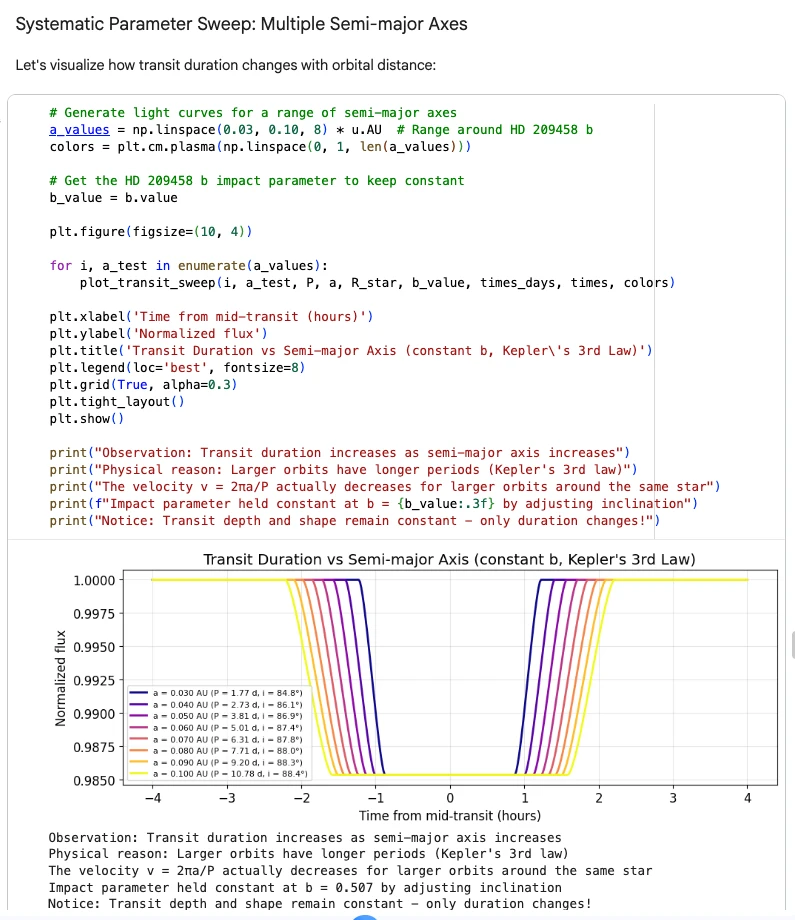
They learn to write scientific Python, and run their own programs on data from a NASA space telescope. Python is the main programming language of astrophysics and data science.
Exoplanet Research Mentorship
My own independent online research course. NASA's TESS space telescope has flagged thousands of possible planets that no one has yet checked. Each student takes a set of these stars and, over fourteen one-hour online sessions, does the checking that turns a candidate into a planet.
Designed and taught by Dr Matthew Hooton, astrophysicist.
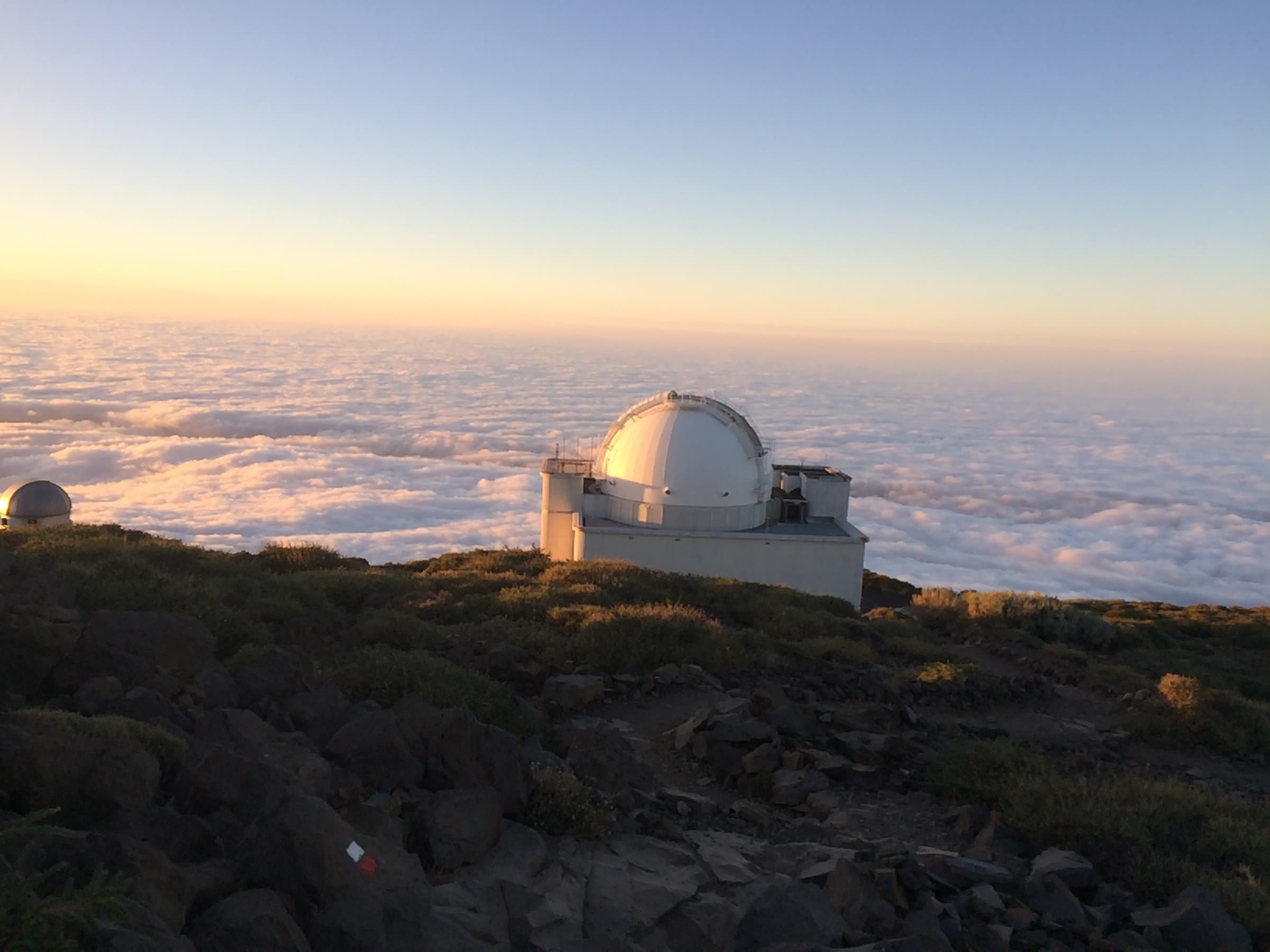
EnquireThe Isaac Newton Telescope above the clouds, La Palma.
An exoplanet is a planet that orbits a star other than the Sun. The first was found in the 1990s. Most of the planets known today were found by watching for a small, regular dimming of a star's light as a planet passes in front of it; a graph of the star's brightness over time is called a light curve.
Since 2018, TESS has found almost 10,000 such signals. Each one is only a candidate until it has been checked with further observations, because two stars orbiting each other can produce a similar dimming. Fewer than half of these candidates have been checked, because there are not enough astrophysicists to do it.
They learn to write scientific Python, and run their own programs on data from a NASA space telescope. Python is the main programming language of astrophysics and data science.
They work on a question whose answer nobody yet knows. They learn to read the research literature, and to rule out false alarms in imperfect data. Above all, they learn to reason about statistics and uncertainty, which is the biggest shift between learning science and doing it.
Each week they talk me through their results. They come away with a complete research project, written up as a paper, that they understand in every detail and can defend in an interview. Afterwards they are free to submit it to a journal, a conference or a science fair, and I advise on where.
I began teaching this course in late 2025. Papers from it have so far produced three journal submissions and, in 2026, a poster selected for presentation at the Australian Institute of Physics Congress, Australia's national physics conference. Former students have continued their research with me beyond the course, and one has entered a national science competition with that work.
“By the end, I had learned a huge amount about both the science and the research process, and producing a complete paper made the experience feel genuinely worthwhile.”
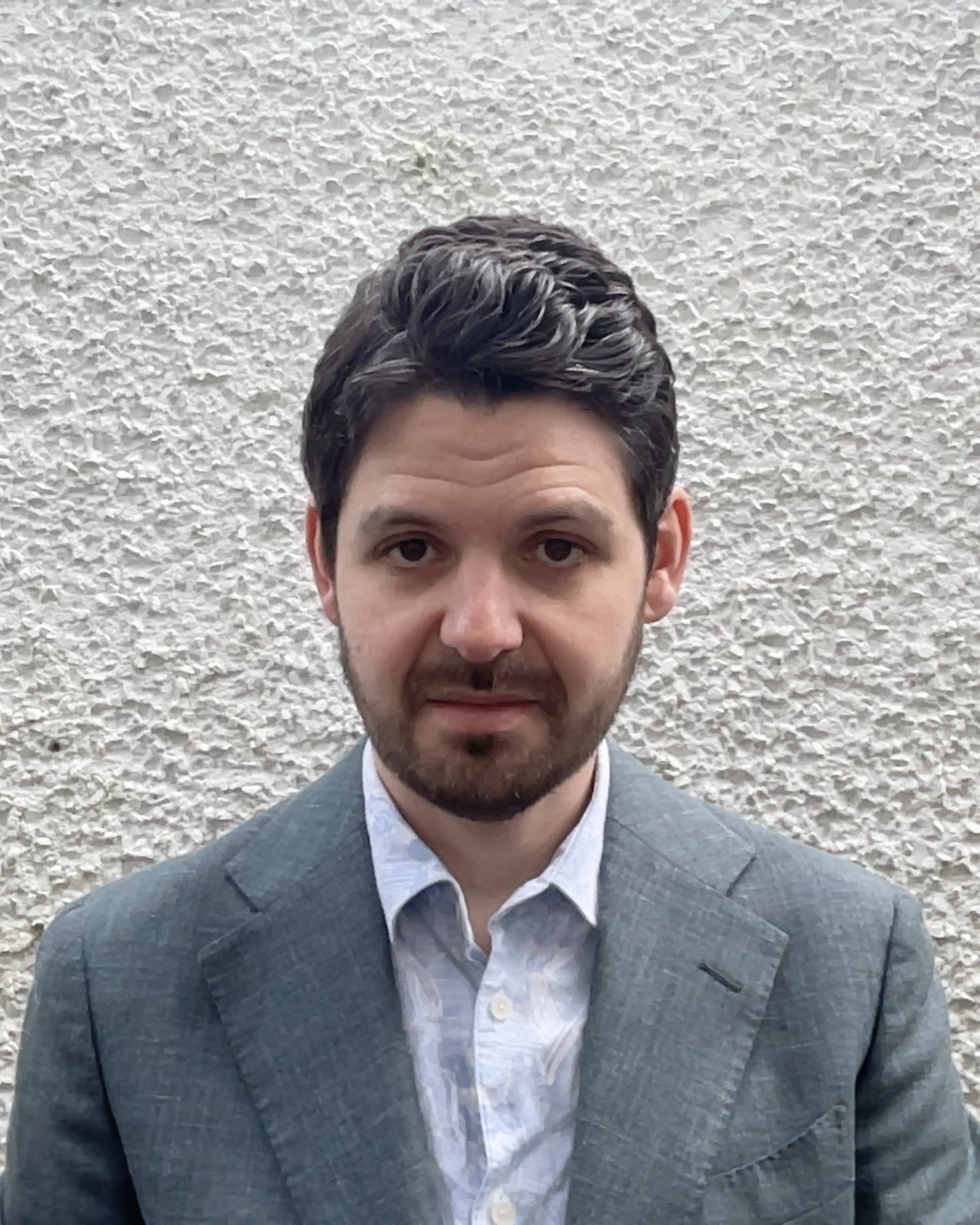
I am an astrophysicist at the University of Cambridge, in the group of Professor Didier Queloz, who shared the 2019 Nobel Prize in Physics for discovering the first planet orbiting a star like the Sun. I lead a programme of observations with the James Webb Space Telescope, am on the science team of the CHEOPS space telescope, co-supervise a PhD student, and have published more than 80 papers, including in Nature and Science.
This is my own independent course. I designed it and teach every session myself, and I take only a few students each year.
Sessions 1–6
How planets are found and measured from the dimming of their stars, what real TESS data looks like, how a planet search works, and how a research paper is written. Taught through interactive notebooks the student runs and changes.
Sessions 7–14
Three stages, each building on the last, with the paper written alongside, section by section. These are the steps a professional astrophysicist follows.
They write their own code to find the signals in the TESS data for 20 stars, and narrow them down to two candidates.
They analyse images from ground-based telescopes to rule out the eclipsing stars that can mimic a planet.
They fit a statistical model to measure the planet's size and orbit with proper uncertainties.

The paper is theirs: they write it themselves, and it carries their name.
I take only a few students each year. For fees and availability, tell me a little about your student and I'll reply within 48 hours to arrange a short conversation.